
What Are the Main Types of Corn Used in Food Manufacturing?
Corn is one of the most versatile crops grown in the United States, but not every kernel is created equal. Commodity field corn dominates acreage and feeds livestock and ethanol plants, while a growing share of food manufacturers depend on specific types of corn to deliver the flavor, color, texture, and nutritional profile their products demand. From tortilla chips and masa to breakfast cereals, snack foods, and craft spirits, the corn a manufacturer selects directly shapes the quality and consistency of the finished product.
Knowing how corn types differ is essential for anyone sourcing grain for food production. The differences in kernel hardness, starch makeup, color, and handling standards decide how corn mills, cooks, fries, and expands, and they influence which supplier is the right fit for the job.
The Main Types of Corn Used in Food Manufacturing
Specialty corn is corn grown and handled for a specific end use rather than sold as a bulk commodity. These lots are typically identity preserved, meaning they are planted, harvested, stored, and transported separately to protect their unique characteristics, and many are also grown as non-GMO or certified organic to meet the expectations of food brands and consumers.
Food-Grade Dent Corn
Dent corn is named for the small dent that forms on the kernel crown as it dries, a result of its mix of hard and soft starch. Food-grade white and yellow dent corn is the backbone of masa, tortillas, corn chips, and corn flour, and it is the type most food manufacturers buy by volume.
Flint Corn
Flint kernels have a hard, glassy outer layer and less soft starch. That structure holds up during cooking, which is why flint corn is prized for polenta, grits, and coarse cornmeal.
Flour Corn
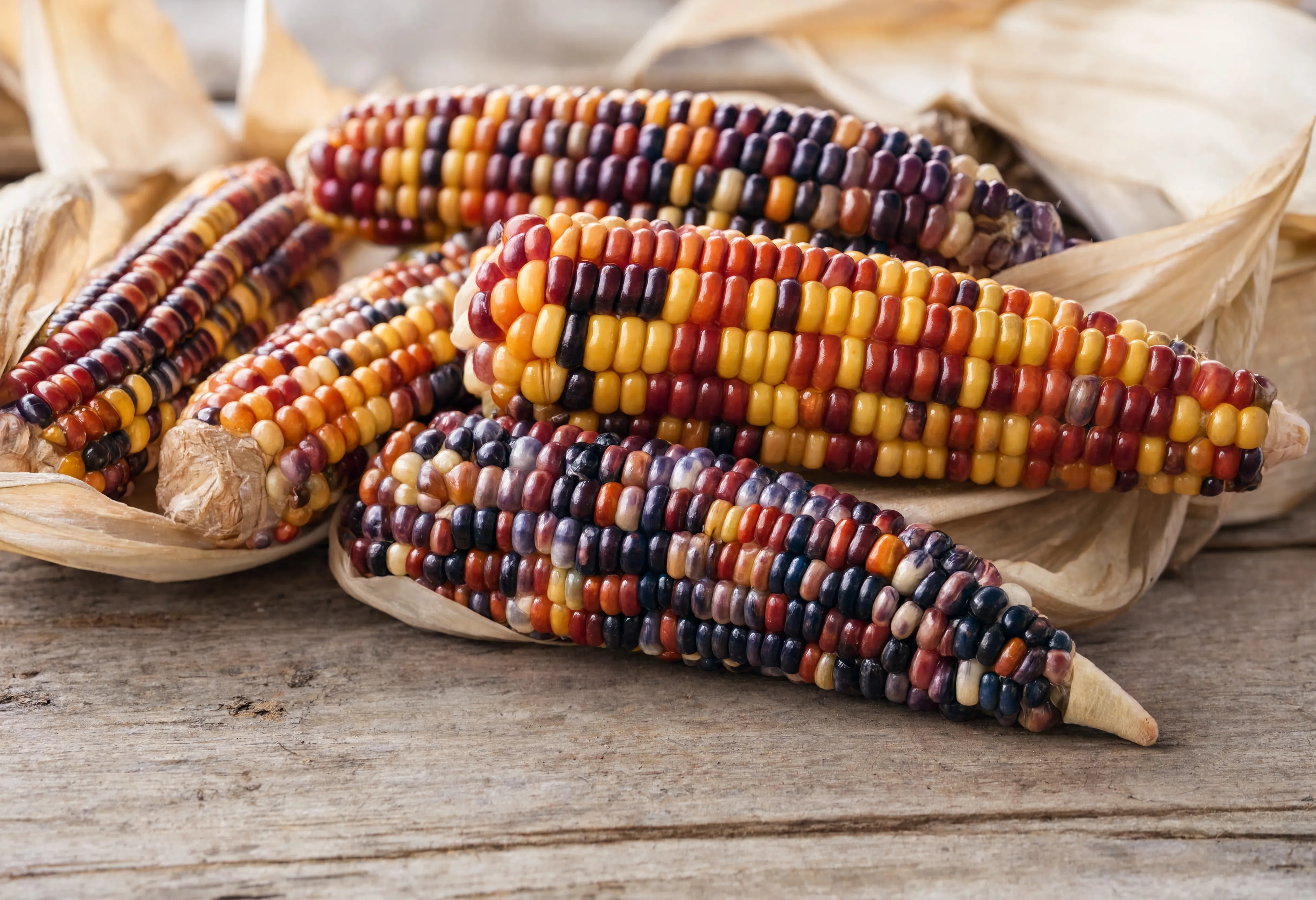
Flour corn is made up mostly of soft starch, so it grinds easily into fine, tender flour. Many heirloom blue and other colored varieties fall into this category, which makes flour corn a favorite for artisan baking and specialty tortillas.
Popcorn
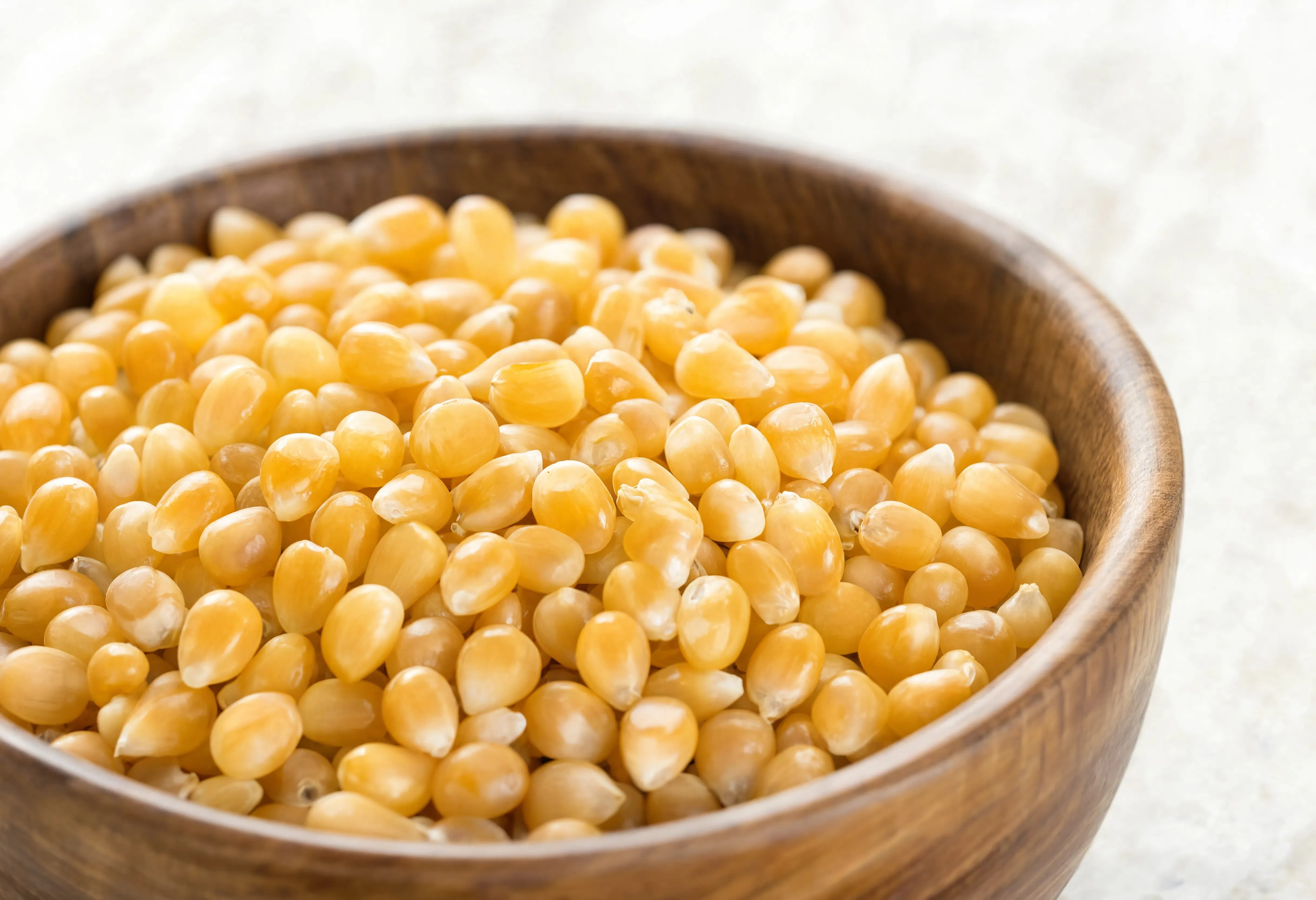
Popcorn is a specialized type closely related to flint corn. Its moisture-sealed hull lets the kernel build pressure and expand dramatically when heated, and that trait sets it apart from every other corn type.
Waxy Corn
Waxy corn contains nearly all amylopectin starch, which gives it unique functionality in food starches, thickeners, and certain processed foods. Its starch is valued for clarity, stability, and smooth texture.
High-Amylose and High-Oil Corn
These types are bred for particular functional or nutritional properties. High-amylose corn is a source of resistant starch that acts like dietary fiber, and high-oil corn is bred for higher oil content.
Types of Corn at a Glance
| Corn Type | Kernel Character | Typical Food Uses |
|---|---|---|
| Food-grade dent | Mix of hard and soft starch, dented crown | Masa, tortillas, corn chips, corn flour |
| Flint | Hard, glassy outer layer | Polenta, grits, coarse cornmeal |
| Flour | Mostly soft starch | Fine flour, artisan baking, heirloom blue products |
| Popcorn | Moisture-sealed hull that expands with heat | Popped snacks |
| Waxy | Nearly all amylopectin starch | Food starches, thickeners, processed foods |
| High-amylose and high-oil | Bred for functional or compositional traits | Resistant starch ingredients, specialty uses |
Dent Corn vs. Flint Corn and Other Differences Between Corn Types
Corn types differ from one another and from commodity corn in several ways that matter on a production line. A small shift in kernel hardness or moisture can change how masa hydrates, how chips fry, or how much flour a mill can extract from each bushel.
Kernel Hardness and Milling Behavior
The ratio of hard (vitreous) to soft (floury) endosperm affects milling yield, particle size, and how corn behaves during cooking and nixtamalization. Dent corn balances both, flint corn leans hard, and flour corn leans soft.
Starch Composition Across Types of Corn
The balance of amylose and amylopectin influences texture, viscosity, and expansion in finished foods. In one laboratory comparison published in Ciencia e Tecnologia de Alimentos, normal corn starch measured about 27.8 percent amylose, waxy corn starch about 1.8 percent, and high-amylose corn starch about 71 percent.
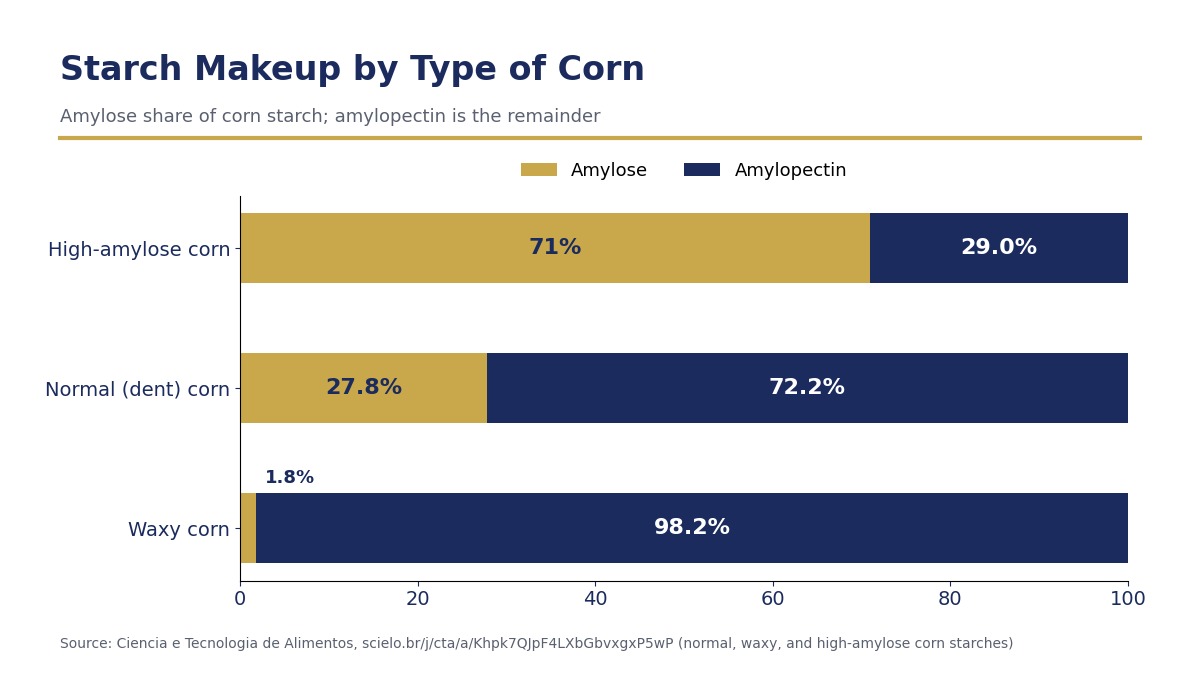
Source: Ciencia e Tecnologia de Alimentos
Pigmentation, Genetics, and Handling Standards
- Pigmentation: natural pigments such as carotenoids and anthocyanins give corn its color and contribute antioxidants and flavor
- Genetic background: heirloom, open-pollinated, and hybrid varieties each bring different flavor profiles and agronomic traits
- Production and handling: non-GMO and organic programs require careful field isolation, testing, and segregated storage to maintain purity
Dent Corn vs. Flint Corn Compared
| Trait | Dent Corn | Flint Corn |
|---|---|---|
| Starch structure | Hard and soft starch | Hard, glassy starch with less soft starch |
| Cooking behavior | Cooks evenly into pliable masa | Holds texture during cooking |
| Grind | Fine flour and masa | Coarse meal and grits |
| Best fit | Tortillas, chips, corn flour | Polenta, grits, coarse cornmeal |
White, Yellow, Blue, and Other Corn Colors
Color is often the first trait buyers consider, and each option brings distinct qualities to food products. Buyers can compare the yellow, white, blue, purple, and pink corn lines when planning a product line.
- Yellow corn: rich in carotenoids with a slightly sweet, full flavor and warm golden color, popular for chips, cornbread, cereals, and snacks
- White corn: a mild, clean flavor and bright appearance, a traditional favorite for tortillas, masa, and white corn chips
- Blue corn: a nutty, slightly earthy flavor and naturally high anthocyanins, used in tortilla chips, atole, pancakes, and premium products, with a softer kernel that yields a finer texture
- Purple corn: deeply pigmented and used in snacks, natural colorants, and traditional beverages such as chicha morada
- Pink and red corn: less common varieties that add eye-catching color to artisan tortillas, chips, and specialty flours
Colored corn has gained ground as consumers look for natural color, heritage stories, and added nutritional interest, and offering a blue or purple product is a simple way for many brands to differentiate a line.
How Types of Corn Affect End Use
The right corn for one product can be the wrong corn for another. Manufacturers match corn type to their process and finished goods based on how each variety performs in real production conditions.
Masa, Tortillas, and Chips
Food-grade white, yellow, and blue dent corn are ideal for nixtamalization, the traditional process of cooking corn in an alkaline solution. Consistent kernel size, pericarp thickness, and hardness help the corn cook evenly and produce pliable masa, and chip makers look for the right crunch, color, and oil absorption. Buyers who need food-grade corn for masa and chips should confirm kernel specifications before ordering.
Cornmeal, Grits, and Polenta
Harder flint and dent varieties hold their shape and produce a pleasing coarse grind, while softer varieties create smoother textures.
Corn Flour, Cereals, and Extruded Snacks
Flour corn and softer dent corn mill into fine, uniform flour suitable for baked goods, breading, and gluten-free formulations. In cereals and extruded snacks, kernel hardness and starch profile influence how corn expands and crisps during extrusion or flaking.
Distilling, Brewing, and Natural Colorants
Craft distillers often seek heirloom and colored corn for the flavor notes they bring to whiskey, bourbon, and other spirits. Highly pigmented purple and blue corn also supply natural colors and antioxidant-rich ingredients.
Where Food and Beverage Makers Use Corn
Corn feeds a large processing industry beyond feed and fuel. In market year 2023, U.S. processors used 410 million bushels for high-fructose corn syrup, 360 million for glucose and dextrose, 230 million for starch, 219 million for cereals and other food products, and 165 million for beverage alcohol.
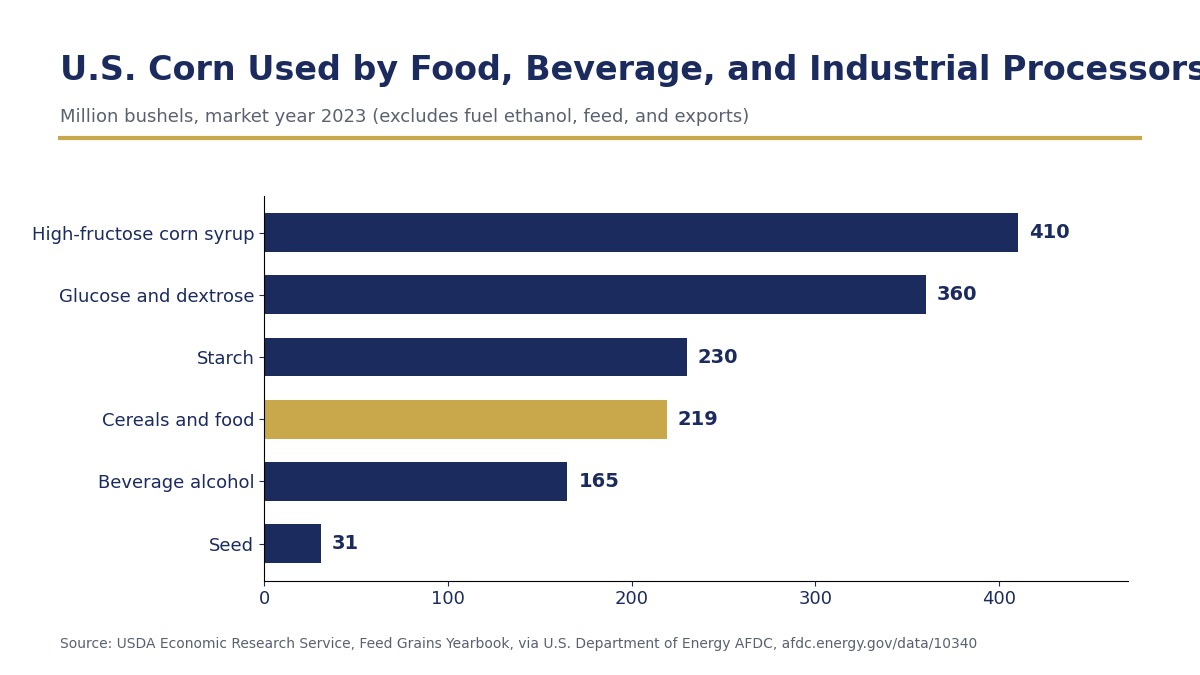
Source: USDA Economic Research Service Feed Grains Yearbook, via the U.S. Department of Energy
Process Fit Matters Too
A variety that performs beautifully in a stone mill may behave differently on a high-speed industrial line. Manufacturers should weigh moisture content, test weight, and breakage susceptibility alongside flavor and color when evaluating any corn for a specific application.
| Application | What to Look For | Common Corn Types |
|---|---|---|
| Masa and tortillas | Even cooking, consistent kernel size, pliable masa | White, yellow, and blue dent |
| Tortilla and corn chips | Crunch, color, oil absorption | Dent, blue and colored corn |
| Cornmeal, grits, polenta | Coarse grind, shape retention | Flint, hard dent |
| Corn flour and baking mixes | Fine, uniform flour | Flour corn, soft dent |
| Cereals and extruded snacks | Expansion and crispness | Dent, selected specialty lines |
| Distilling and brewing | Distinct flavor notes | Heirloom, colored corn |
Choosing Corn for Food Manufacturing
Selecting the right corn is a strategic decision that affects product quality, production efficiency, labeling claims, and brand reputation. Buyers who take a structured approach are far more likely to secure a reliable, consistent supply.
- Product requirements: define the flavor, color, texture, and nutritional profile first, then work backward to the corn type
- Quality specifications: set clear limits for moisture, test weight, foreign material, broken kernels, and mycotoxins such as aflatoxin and vomitoxin
- Food safety: confirm the grain is cleaned, handled, and stored in facilities that follow food-grade practices and recognized safety programs
- Supply consistency: corn grown for specific uses comes in smaller volumes than commodity corn, so ask about acreage, storage capacity, and year-round lot consistency
- Packaging and logistics: decide whether you need totes, bags, or bulk loads and how delivery aligns with your production calendar
- Traceability: identity-preserved programs should let you trace corn back to the field where it was grown
Certification Needs
Decide whether your brand requires non-GMO verification, USDA organic certification, or both, because these claims must be backed by documentation throughout the supply chain. Organic standards treat genetic engineering as an excluded method, and the USDA National Organic Program policy on GMOs explains how that rule works in practice. Suppliers with non-GMO verified supply and organic-certified corn can supply the paperwork these claims require, and segregated planting, storage, and shipping protects purity from field to dock.
Supplier Questions for Corn Buyers
Choosing a supplier is just as important as choosing the corn itself. Before committing, ask potential suppliers:
- Which corn types do you grow and supply, and in what volumes?
- Is your corn certified non-GMO, organic, or both, and can you provide current certificates?
- How do you prevent cross-contamination with GMO or commodity corn in the field and in storage?
- What testing do you perform for GMO presence and mycotoxins, and will you share a certificate of analysis for each lot?
- How is your grain cleaned, and which food safety programs or audits do your facilities follow?
- Can you trace each shipment back to its field of origin?
- How do you keep quality consistent from one crop year to the next?
- What packaging formats, minimum order quantities, and delivery options do you offer?
- Do you offer samples so we can test performance in our own process?
- How long have you supplied the food industry, and can you share references?
A reputable supplier answers these questions openly and provides documentation without hesitation, and transparency is a strong sign of a partner you can depend on for the long term. When you are ready to compare options, request samples and a quote for your target corn type and volume.
Corn Types Frequently Asked Questions
What is the difference between specialty corn and commodity corn?
Commodity corn is grown in large volumes, mixed together, and sold mainly for animal feed, ethanol, and industrial uses. Specialty corn is grown for a specific purpose, kept separate from other grain, and handled to preserve traits such as color, flavor, purity, and food-grade quality.
What is the difference between dent corn and flint corn?
Dent corn has a mix of hard and soft starch and forms a small dent in the kernel crown as it dries, which makes it easy to mill and a standard for masa and chips. Flint corn has a hard, glassy outer layer and less soft starch, so it holds its texture in polenta, grits, and coarse cornmeal.
Which corn is best for making tortillas?
Food-grade white dent corn is the traditional choice for tortillas, though yellow and blue dent corn are also widely used. The best lot cooks evenly during nixtamalization and produces smooth, pliable masa.
What does non-GMO corn mean?
Non-GMO corn is grown from seed that has not been genetically engineered. Producers use field isolation, testing, and segregated handling to keep the corn free from genetically modified material.
Can corn be both organic and non-GMO?
Yes. USDA organic standards prohibit genetically modified organisms as excluded methods, so certified organic corn is grown without GMO seed. Organic certification is process based and adds requirements for soil management, inputs, and farming practices, and buyers who need a specific testing threshold should request lot testing. Not all non-GMO corn is organic.
Is blue corn different nutritionally from yellow or white corn?
Blue corn is naturally rich in anthocyanins, the same family of pigments found in blueberries. Other nutritional differences vary by variety, growing conditions, and preparation, so buyers who plan nutrition claims should rely on lot-specific lab data.
How can I keep my corn supply consistent?
Work with an experienced supplier that offers identity-preserved programs, maintains adequate storage, provides lot-by-lot testing, and has established relationships with growers. Long-term supply agreements can also help secure volume and pricing.
Partner With Clark Specialty Grains for Premium Non-GMO Corn
The right corn starts with the right supplier. Clark Specialty Grains is a family-owned non-GMO and organic corn and grain supplier with more than 18 years of experience serving the food industry nationwide, and our commitment to quality and sustainability has earned a reputation as a trusted source of food-grade corn. Our corn selection includes:
- Yellow corn
- White corn
- Blue corn
- Purple corn
- Pink corn
Whether you want the finest blue corn or another specialty grain, we supply products that meet high standards of quality and safety. Talk with our team about your production needs, samples, and how the right corn can elevate your products.