
What Is Mycotoxin Testing in Grains?
Mycotoxin testing in grains is a critical food safety practice designed to detect toxic compounds produced by certain molds that can grow on corn and other cereal grains. These naturally occurring toxins can pose serious health risks to humans and animals and can also create major regulatory, financial, and reputational risks for grain buyers, processors, and food manufacturers. As global supply chains grow more complex and consumers demand higher transparency, understanding how mycotoxin testing works and how to manage risk through proper screening and documentation has become essential for anyone involved in sourcing grain.
Grains are particularly susceptible to mycotoxin contamination because they are grown in open environments where moisture, temperature fluctuations, and storage conditions can encourage mold growth. Even with careful farming practices, mycotoxins can develop in the field, during harvest, or while in storage. Because mycotoxins cannot be removed through normal processing once they are present, prevention and testing are the primary tools for protecting food safety and maintaining quality standards.
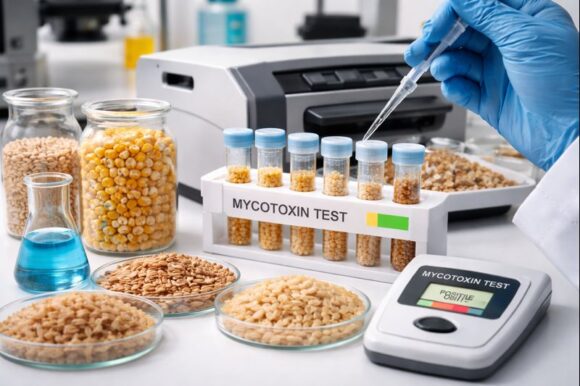
Mycotoxin Testing in Grains: What It Measures and Why
Mycotoxin testing in grains focuses on identifying and quantifying specific toxic compounds produced by molds such as Aspergillus, Fusarium, and Penicillium. These molds thrive under certain environmental conditions, especially warm temperatures and high humidity, which makes crops like corn particularly vulnerable.
Common mycotoxins tested in grains include aflatoxins, fumonisins, deoxynivalenol, commonly known as DON or vomitoxin, zearalenone, ochratoxin A, and T-2 and HT-2 toxins. Each of these mycotoxins presents different risks and regulatory thresholds depending on the grain type and intended end use.
Why these toxins matter goes beyond regulatory compliance. Mycotoxins can cause a range of health effects, including acute poisoning, immune suppression, digestive issues, and long-term chronic conditions when consumed over time. In livestock, mycotoxins can reduce feed efficiency, impair growth, and cause reproductive issues, which directly affect the food supply chain.
From a business standpoint, mycotoxin contamination can lead to rejected loads, product recalls, loss of customer trust, and financial losses. Because mycotoxins are invisible and odorless, testing is the only reliable way to confirm grain safety. For food-grade and specialty grain markets, consistent testing is often a baseline requirement rather than an optional quality check.
Sampling Matters: Why Bad Samples Cause Bad Results
One of the most overlooked aspects of mycotoxin testing in grains is sampling. Mycotoxins are not evenly distributed throughout a load of grain. They tend to occur in pockets or hot spots, which means a poorly collected sample can easily miss contamination or overestimate it.
Effective sampling requires collecting multiple incremental samples from different points within a truck, railcar, or storage bin and combining them into a representative composite sample. Industry guidelines often specify the number of increments needed based on the size of the lot, as well as proper grinding and mixing procedures before testing.
Common sampling mistakes include:
- Taking too few samples
- Sampling only from the surface
- Failing to mix and grind samples thoroughly
- Using non-calibrated or contaminated sampling tools
These errors can lead to inaccurate test results that do not reflect the true mycotoxin risk of the grain. For buyers and suppliers alike, investing in proper sampling protocols is just as important as choosing the right test method. Reliable data begins with representative samples.
Rapid Screens vs Lab Confirmation: When Each Makes Sense
There are several testing methods used in mycotoxin testing in grains, each with different strengths, limitations, and use cases. The two most common categories are rapid screening tests and laboratory-based confirmation tests.
Rapid screening tests, such as lateral flow assays or strip tests, are widely used at grain elevators, processing facilities, and receiving locations. These tests provide quick results, often within minutes, and are relatively easy to perform with minimal training. They are useful for:
- Incoming load screening
- Routine monitoring
- Making quick accept or reject decisions
- Identifying loads that require further testing
However, rapid tests may have higher variability and are generally designed to indicate whether mycotoxin levels are above or below a specific threshold rather than providing highly precise measurements.
Laboratory confirmation methods, such as high-performance liquid chromatography or liquid chromatography mass spectrometry, offer greater accuracy and sensitivity. These methods are typically used when:
- Results will be used for regulatory compliance
- Disputes or claims need to be resolved
- Products are destined for human food or export markets
- Detailed documentation is required
Many grain programs use a tiered approach, starting with rapid screening and following up with lab confirmation when results are near limits or when higher assurance is required. Understanding when each method makes sense helps balance cost, speed, and confidence in results.
Interpreting Results and Setting Accept-Reject Limits
Interpreting mycotoxin test results requires more than just reading a number. Accept and reject limits depend on multiple factors, including regulatory guidelines, customer specifications, intended use, and risk tolerance.
Regulatory limits for mycotoxins vary by country and by application. For example, allowable levels for animal feed may differ from those for human food. Some buyers also set internal limits that are more conservative than regulatory maximums to protect downstream customers and brands.
When setting accept reject limits, buyers and suppliers should consider:
- Applicable federal and state regulations
- End use of the grain
- Historical performance of the supplier
- Variability inherent in testing methods
- Cumulative exposure risks
Clear communication around limits and decision rules is essential. Contracts and specifications should define how results are interpreted, what happens when results are borderline, and whether re-testing or confirmation testing is allowed. This clarity reduces disputes and builds stronger supplier relationships.
Mycotoxin Testing in Grains for Buyers: What to Request from Suppliers
For grain buyers, mycotoxin testing in grains is not just about internal quality control. It is also about managing supplier risk and ensuring traceability throughout the supply chain. Buyers should clearly define their expectations and request documentation that supports compliance and transparency.
Key items buyers often request from suppliers include:
- Certificates of analysis for relevant mycotoxins
- Description of sampling and testing protocols
- Identification of test methods used
- Lot-specific traceability documentation
- Historical testing data or trends
Beyond paperwork, buyers benefit from working with suppliers who proactively manage mycotoxin risk rather than reacting only when problems arise. This includes suppliers who invest in good agronomic practices, proper storage, and ongoing monitoring.
Buyers may also conduct audits or assessments to verify that suppliers follow documented procedures. These audits often focus on sampling practices, storage conditions, equipment calibration, and corrective action processes when issues are identified.
Establishing clear expectations upfront reduces surprises and helps ensure that grain arriving at the facility meets safety and quality standards consistently.
Preventing Mycotoxin Issues: Storage, Handling, and Sourcing
While testing is essential, prevention remains the most effective way to manage mycotoxin risk. Mycotoxin testing in grains works best when combined with strong preventive practices across storage, handling, and sourcing.
Storage plays a major role in mycotoxin development. Even grain harvested in good condition can become contaminated if stored improperly. Key storage practices include:
- Maintaining low moisture levels
- Controlling temperature through aeration
- Monitoring bins for hot spots or condensation
- Cleaning bins and handling equipment regularly
Handling practices also matter. Minimizing kernel damage during harvest and transport reduces opportunities for mold growth. Prompt drying after harvest and avoiding delays in storage can significantly reduce risk.
Sourcing decisions are another important factor. Buyers who work with experienced, transparent suppliers often face fewer mycotoxin challenges. Suppliers who understand regional growing conditions, select appropriate varieties, and implement quality controls from field to shipment are better positioned to deliver consistent results.
Preventive strategies are most effective when they are documented and verified. Standard operating procedures, training programs, and continuous improvement efforts help ensure that prevention is not just a goal but a measurable practice.
Building Confidence Through Testing and Partnership
Mycotoxin testing in grains is not simply a technical requirement. It is a shared responsibility across the supply chain that supports food safety, regulatory compliance, and customer trust. Effective programs combine representative sampling, appropriate testing methods, clear interpretation of results, and proactive prevention strategies.
For buyers, the goal is confidence. Confidence that the grain meets specifications. Confidence that suppliers are managing risk responsibly. Confidence that documentation will stand up to scrutiny from regulators and customers alike.
For suppliers, robust testing and preventive practices demonstrate commitment to quality and help differentiate their products in a competitive market. Transparency and consistency build long-term partnerships that benefit both sides.
Work With a Supplier You Can Trust
When it comes to sourcing high-quality specialty grains, partnering with a supplier who prioritizes safety, transparency, and consistency makes all the difference. Clark Specialty Grains is your premier non-GMO corn and grain supplier in the US. As a family-owned business with over 18 years of experience, Clark Specialty Grains is proud to deliver the highest quality organic and non-GMO corn varieties to the food industry. Our commitment to excellence and sustainability has earned us a reputation as a trusted source of food-grade corn, offering a diverse range of varieties, including yellow, white, blue, purple, and pink. Whether you are looking for the finest blue corn or any other specialty grain, we are committed to providing products that meet the highest standards of quality and safety. Learn more about our approach to quality and sourcing and discover how a trusted supplier can support your mycotoxin risk management goals.