
What Are Aflatoxin Limits for Corn Used in Food?
Corn is a foundational ingredient across the global food system, appearing in everything from tortillas and cereals to snack foods and specialty ingredients. Because corn is grown in open field conditions and often stored for extended periods, it is also vulnerable to contamination by aflatoxins. For food manufacturers, millers, and ingredient buyers, understanding aflatoxin limits in corn for human consumption is not optional. It is a critical part of food safety, regulatory compliance, brand protection, and consumer trust.
Aflatoxins are naturally occurring mycotoxins produced by certain molds, primarily Aspergillus flavus and Aspergillus parasiticus. These molds can grow on corn in the field, during harvest, or in storage when conditions are favorable. Because aflatoxins are toxic and carcinogenic, regulatory agencies set strict thresholds for how much is allowed in corn used for human food. Buyers who understand these limits and how they are enforced are far better positioned to protect their supply chain and avoid costly disruptions.
Aflatoxin Limits in Corn for Human Consumption: What Buyers Need to Know
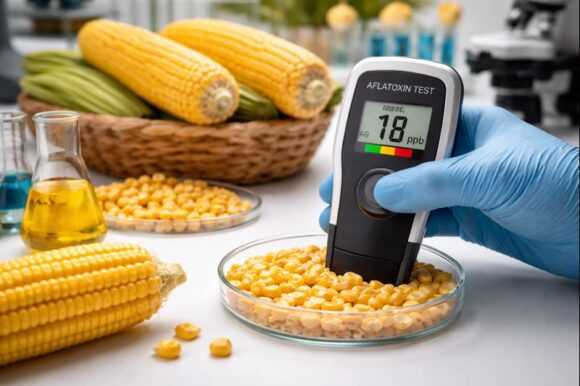
Aflatoxin limits refer to the maximum allowable concentration of aflatoxins in corn that is intended for food use. In the United States, the Food and Drug Administration establishes action levels rather than formal tolerances. For corn used directly in human food, the FDA action level is 20 parts per billion total aflatoxins. This threshold is designed to protect public health while recognizing the practical realities of agricultural production.
For buyers, it is important to understand that limits are not abstract regulatory numbers. They are procurement requirements that determine whether a load of corn can be accepted, rejected, reworked, or diverted to a different use. When a contract specifies food-grade corn, it implicitly requires compliance with the aflatoxin limit applicable to human consumption. Loads that exceed this level are considered non-compliant for food use, even if they are otherwise clean and meet specifications for moisture, test weight, and appearance.
Aflatoxin limits matter at several levels of the supply chain. Growers must manage risk in the field. Elevators and processors must monitor storage and handling conditions. Buyers must verify compliance through documentation and testing. A failure at any point can result in rejected shipments, regulatory exposure, or downstream recalls.
From a procurement perspective, aflatoxin limits also influence pricing and availability. Corn that consistently tests well below the action level is more valuable for food applications, especially for specialty products such as non-GMO, organic, or identity-preserved varieties. Buyers sourcing these products should expect more rigorous testing and traceability as part of the value proposition.
What Drives Aflatoxin Risk (Weather, Storage, Damage)
Aflatoxin risk in corn is driven by a combination of environmental and handling factors. The weather is one of the most significant contributors. Hot, dry conditions during the growing season, particularly during pollination and grain fill, increase stress on the plant and make it more susceptible to Aspergillus infection. Drought followed by late-season rains can further elevate risk.
Physical damage to kernels is another major factor. Insect feeding, hail, and mechanical damage during harvest create entry points for mold growth. Once kernels are compromised, aflatoxin-producing molds can colonize more easily.
Storage conditions play a critical role after harvest. Corn that is stored at elevated moisture levels or exposed to temperature fluctuations is more likely to develop mold. Poor aeration, condensation, and long storage durations increase the likelihood that aflatoxin levels will rise over time, even if the corn tested low initially.
Key risk drivers include:
- Prolonged heat and drought stress in the field
- Insect pressure and kernel damage
- Delayed harvest or late-season weather events
- High moisture at storage
- Inadequate aeration or temperature control
- Extended storage periods without monitoring
Understanding these drivers helps buyers evaluate supplier practices and assess whether a supply program is built to consistently meet food-grade aflatoxin limits.
Aflatoxin Limits in Corn: How Testing and Compliance Work
Testing is the backbone of aflatoxin compliance. Because aflatoxins are invisible and unevenly distributed, visual inspection alone is not sufficient. Reliable testing depends on proper sampling, validated analytical methods, and clear documentation.
Sampling is often the most overlooked but most critical step. Aflatoxins tend to be highly heterogeneous, meaning a few contaminated kernels can significantly elevate the test result. Representative sampling requires collecting multiple incremental samples from a lot and combining them into a composite sample that accurately reflects the whole. Poor sampling practices can lead to false negatives or false positives, both of which create risk.
Once a representative sample is collected, it is analyzed using approved methods. Common testing approaches include rapid test kits such as lateral flow devices and enzyme-linked immunosorbent assays, as well as confirmatory laboratory methods like high-performance liquid chromatography. Rapid tests are widely used at receiving points because they provide quick results, while lab-based methods are often used for verification and dispute resolution.
Compliance is established by comparing test results to the applicable limit. For food-grade corn, results must be at or below 20 parts per billion total aflatoxins. Many buyers set internal specifications that are more conservative, such as targeting levels well below the action limit to provide a safety margin.
Documentation ties the entire process together. Test results must be linked to specific lots, dates, and shipments so that compliance can be demonstrated to auditors, regulators, and customers.
What to Ask For: COA Details, Lab Methods, Lot Traceability
Buyers play an active role in ensuring aflatoxin compliance by clearly defining documentation requirements. One of the most important documents is the Certificate of Analysis, or COA. A robust COA should provide more than just a pass or fail statement.
When reviewing COAs, buyers should look for:
- The specific aflatoxin result reported in parts per billion
- The test method used, including whether it was a rapid test or lab analysis
- The name of the laboratory or test kit manufacturer
- The date of testing
- The lot or batch number associated with the result
Lot traceability is equally important. Each shipment should be traceable back to a defined lot that was tested. This allows buyers to isolate issues if a problem is discovered later and demonstrates control over the supply chain.
Asking the right questions upfront helps set expectations with suppliers and reduces the risk of surprises at delivery. It also signals that food safety is a priority, which encourages better practices throughout the chain.
How to Reduce Aflatoxin Risk in Corn Supply
Reducing aflatoxin risk requires a proactive, systems-based approach. There is no single intervention that guarantees compliance, but layered controls significantly improve outcomes. Buyers sourcing corn for human food should work with suppliers who understand and manage risk from field to finished ingredient.
Field-level practices are the first line of defense. These include selecting hybrids with good stress tolerance, managing irrigation where possible, controlling insects, and timing harvest to minimize damage. While buyers may not control these practices directly, they can prioritize suppliers who invest in agronomic best practices.
Post-harvest handling is the next critical stage. Rapid drying to safe moisture levels, careful handling to reduce breakage, and clean storage facilities all reduce the likelihood of aflatoxin development. Ongoing monitoring of stored corn allows issues to be identified early.
Testing strategies should be risk-based. Higher risk lots may require more frequent testing or confirmation by an independent laboratory. Maintaining historical data helps suppliers and buyers identify patterns and adjust sourcing strategies accordingly.
Handling Non-Compliant Loads: Holds, Retests, Diversion Plans
Even with strong controls, non-compliant loads can occur. How these situations are handled makes a significant difference in cost, compliance, and relationships. Buyers should have clear procedures in place before a problem arises.
Common steps include placing the load on hold while results are reviewed and confirmed. In some cases, a retest using a different method or laboratory may be appropriate, particularly if results are close to the limit. It is essential that retesting follows proper sampling protocols to avoid compounding errors.
If a load is confirmed to exceed the aflatoxin limit for human consumption, diversion plans should be executed. This may involve redirecting the corn to an approved non-food use where higher limits apply, provided regulatory requirements are met. Clear contracts and communication help ensure that diversion is handled legally and efficiently.
Best practices for managing non-compliant loads include:
- Immediate isolation and hold procedures
- Clear criteria for retesting
- Predefined diversion channels
- Thorough documentation of decisions and actions
Having these plans in place protects both buyers and suppliers and minimizes disruption.
Partnering for a Compliant Food Grade Corn Supply
Ultimately, managing aflatoxin limits in corn for human consumption is about partnership. Buyers who work closely with experienced, transparent suppliers are better equipped to navigate regulatory requirements and market variability. A strong supplier does more than provide test results. They build systems designed to consistently deliver safe, high-quality corn.
Clark Specialty Grains exemplifies this approach. As your premier non-GMO corn and grain supplier in the US, Clark Specialty Grains brings over 18 years of experience as a family-owned business dedicated to quality, safety, and sustainability. Our commitment to excellence has earned us a reputation as a trusted source of food-grade corn for the food industry. With a diverse range of organic and non-GMO varieties, including yellow, white, blue, purple, and pink corn, we understand the unique requirements of specialty applications and the importance of rigorous aflatoxin control. Whether you are sourcing the finest blue corn or another specialty grain, Clark Specialty Grains is committed to providing products that meet the highest standards of quality and safety. If you are looking to strengthen your supply chain and ensure compliance with aflatoxin limits, connect with us to learn how our expertise and dedication can support your food-grade corn needs.